
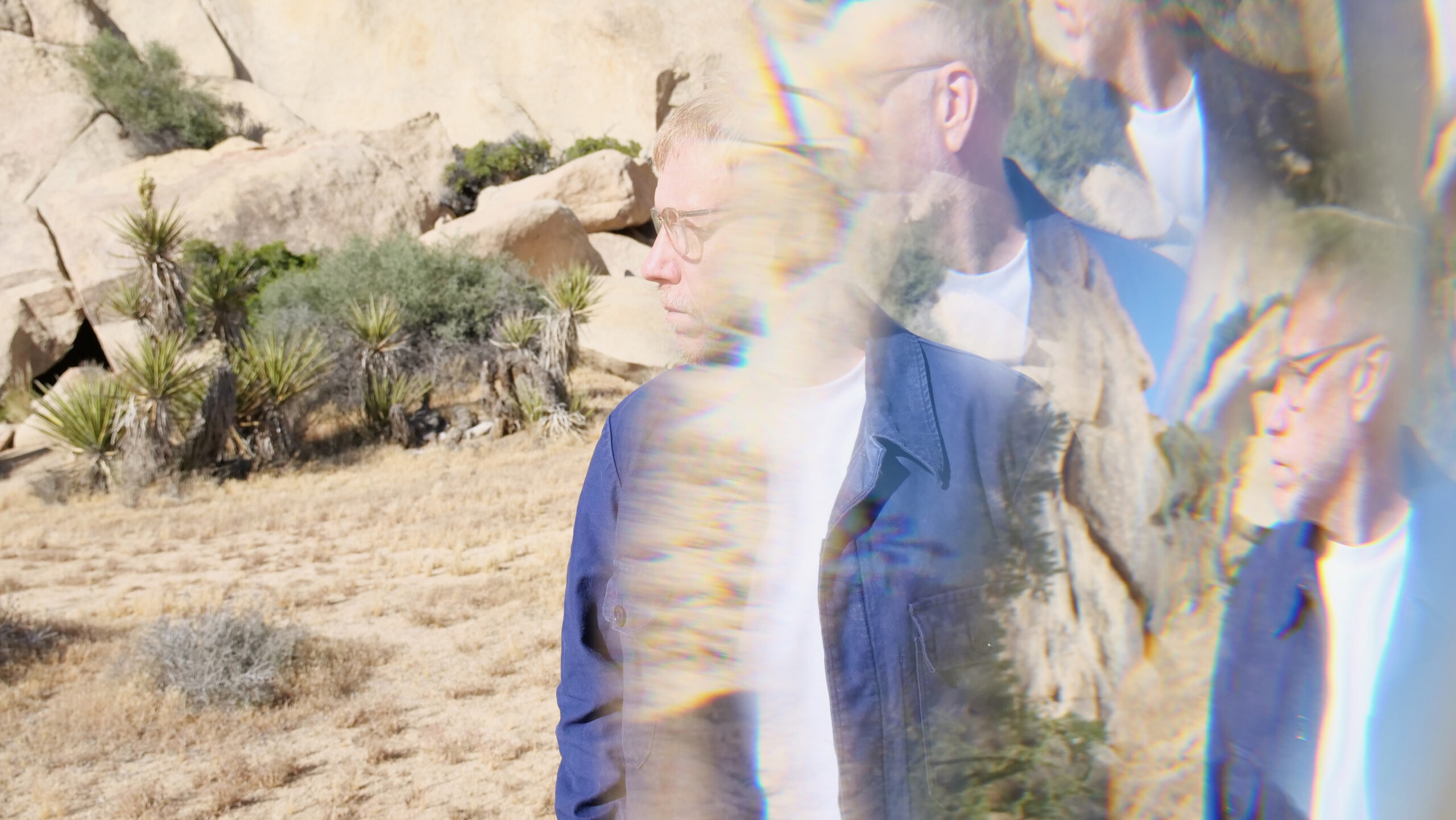
Vancouver-based ambient artist and sonic wanderer Michael Scott Dawson will release two new full-length albums, Long Slow Distance and Kitsune No Yomeiri, on September 4, 2026 via We Are Busy Bodies. Existing as distinct points on a shared axis, the records arrive simultaneously yet inhabit entirely different emotional and sonic worlds. Kitsune No Yomeiri finds Dawson weaving minimalist guitar, tape delay, and field recordings captured throughout Japan into a meditation on memory and connection, while Long Slow Distance is his most atmospheric and emotionally expansive work to date, suspended between grief and acceptance, movement and stillness.
A prolific collaborator and quietly singular voice within Canada’s experimental music community, Dawson has built a body of work defined by intimacy, imperfection, and a deep sense of place. Across both albums, he continues to transform fleeting moments into immersive listening experiences, creating fragile headphone landscapes that feel at once deeply personal and universally resonant.
Kitsune No Yomeiri, translated as “the fox’s wedding,” a Japanese expression used to describe a sunshower emerged following Dawson’s recent tour of Japan. Returning home with a collection of field recordings documenting spring rain, temple grounds, quiet streets, and bustling city intersections, Dawson found himself inspired not only by the sounds he encountered, but by the conversations that unfolded after each performance.
“Through navigating the language barrier, I found myself communicating with a sincerity I would normally avoid,” says Dawson. “I’ve always made records alone at home in a vortex, but this time it felt like those conversations were there with me in the studio.”
The resulting album leans gently toward Dawson’s prairie roots, with earthy guitar tones, subtle tape delay, and recurring melodic motifs creating the feeling of moving through a novel rather than a collection of songs. Memories overlap, phrases return, and chance encounters become part of a larger story.
The album’s lead single, “Slow Rain In Tokyo,” captures a defining moment from the tour. On the final day, after performing a matinee at Tokyo record shop Harunoame and an evening concert alongside Chihei Hatakeyama and Ken Ikeda, Dawson emerged from a basement venue into a rain-soaked, neon-lit street. The reflections of lanterns and signs shimmered across wet pavement as he made one final field recording. Built around that recording, the piece transforms a fleeting urban moment into a dreamlike meditation on distance, memory, and place.
If Kitsune No Yomeiri looks outward, Long Slow Distance turns inward.
Inspired by grief, change, forgiveness, love, and the act of running, the album reflects Dawson’s evolving relationship with both music and life. Having begun running around the same time he started making records, Dawson now views the title as an ethos rather than simply a phrase.
Recorded using only three extended guitar performances per piece, panned across the stereo field with minimal overdubs, Long Slow Distance strips away the layered collage techniques of Dawson’s previous work. The result is spacious, patient, and deeply human.
“I remember my grandmother always kept a rain barrel on the farm,” Dawson explains. “Just a simple vessel for gathering water for the garden and flowers. I wanted to instill that sentiment on this record. Other than some panning and recreational EQing, the computer was just a vessel for gathering sounds.”
Throughout the album, guitars dissolve and reform. Melodies bloom, fracture, and return. Warm harmonies collide and reconcile against a backdrop of weathered textures, field recordings, and distant horizons. The music moves with quiet purpose, propulsive yet glacial, rooted yet searching.
Lead single “The City You Built” serves as the emotional centrepiece of the record. Opening with a warm decaying drone before unfolding into crystalline guitar and shimmering overtones, the composition was inspired by a trip to rural Nova Scotia, where Dawson and his brother helped prepare their father’s property for sale. Hidden among the trees stood a remarkable collection of handmade structures built entirely from reclaimed materials; a miniature Old West town complete with storefronts, workshops, and a saloon. As Dawson recorded the surrounding insects and surveyed the scene, he was reminded of the importance of preserving creativity throughout every stage of life. The resulting piece is both elegy and celebration, honouring the spaces we build and the people who leave them behind.
Together, Long Slow Distance and Kitsune No Yomeiri represent two complementary perspectives from one of Canada’s most quietly compelling experimental artists. One album finds wonder in unfamiliar places and new connections; the other seeks peace amid loss and transformation. Both are deeply rooted in observation, memory, and the enduring power of small moments.